
Why Do Your Teeth Still Feel Fuzzy Even After You Brush Twice Every Single Day
This casual, evidence-backed dental science piece breaks down tiny daily habits that secretly damage your smile, no confusing jargon or fancy clinical research required.
You have definitely run into this awkward situation before: you stand in front of the bathroom mirror, brush every corner of your teeth for a full two minutes with the minty toothpaste your dentist recommended, spit out the foam, rinse your mouth thoroughly, head out for work, and an hour later you run your tongue across your front teeth and feel that weird, slimy fuzzy layer that makes you think you somehow missed a whole step of cleaning. You might even rush back to the bathroom during your midday break and drag your toothbrush across your teeth so hard that your gums start to bleed, just to scrape that unpleasant texture off, but it comes back again faster than you can finish a bottle of iced cola on a hot summer afternoon. Most of us are taught from childhood that this fuzzy feeling equals leftover food residue and poor brushing performance, but the truth behind that texture is far more interesting than you think, and it has almost nothing to do with whether you skipped a brushing session the night before.
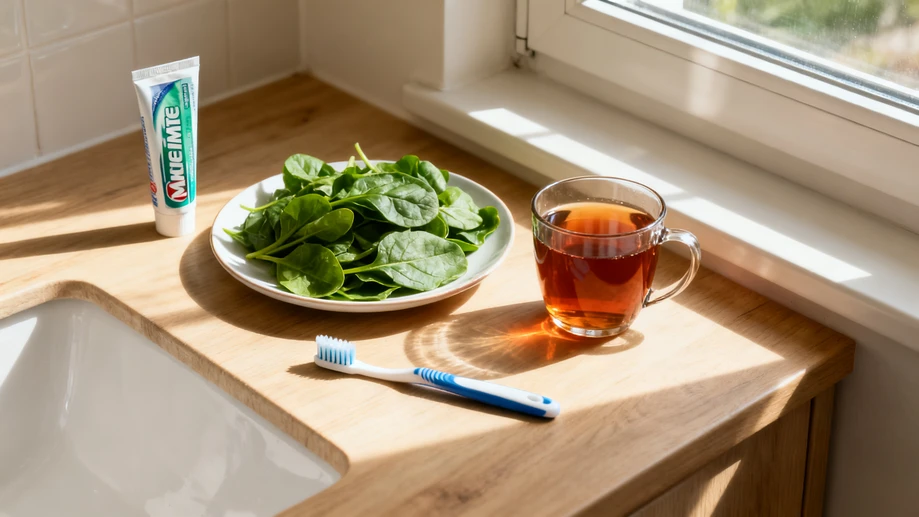
That familiar fuzzy coating actually has two very common, non-scary sources that show up in your daily routine all the time. The first and most frequent cause is a temporary film formed by mineral reactions in your mouth: many common foods including raw spinach, almonds, whole grain crackers, and even some types of black tea contain high levels of oxalic acid, which binds to the calcium naturally present in your saliva the second you chew them, forming tiny, smooth mineral deposits that stick evenly to the surface of your tooth enamel. This deposit does no harm to your teeth at all, and it will naturally break down completely on its own within two to three hours, no extra brushing required. The second source is the early formation of dental plaque, which is not a pile of leftover food bits as most people imagine, but a thin, organized community of friendly bacteria that lives in every healthy person’s mouth 24 hours a day. This bacterial layer only turns harmful and starts to produce cavity-causing acid when it is left undisturbed for more than 12 to 16 hours, which means the faint fuzzy feeling you get an hour after brushing is never a sign that your oral cleaning routine failed.
This little-known fact about fuzzy teeth explains why so many people who follow the "brush twice a day for two minutes" rule still end up with unexpected cavities and sensitive teeth by their late 20s. The most common mistake 90% of casual brushers make is rinsing their mouth out with a big gulp of water right the second they finish brushing. The thin layer of fluoride left on your enamel after you spit out excess toothpaste is supposed to stay there for at least 30 minutes to repair tiny micro-damages caused by daily eating and drinking, but if you flood your mouth with tap water immediately after brushing, you wash away almost 90% of that protective fluoride before it gets the chance to work. Another far more damaging common habit is brushing your teeth within 30 minutes of finishing a meal that contains acidic food or drinks, from a glass of orange juice at breakfast to a plate of tomato pasta for dinner. Acids temporarily soften the outer layer of your enamel, and aggressive brushing during that window will scrape off tiny particles of the protective layer that will never grow back, leading to permanent tooth sensitivity and dull, yellow looking teeth over the years.
You do not need to buy fancy 100-dollar electric toothbrushes, expensive whitening strips or rare herbal mouthwash to fix these hidden small issues and keep your teeth feeling smooth and healthy all day. All you need to do is make three tiny adjustments to your existing routine. First, after you finish brushing, spit out all the excess foamy toothpaste in your mouth, and skip the full mouth rinse with water completely. If the leftover minty taste feels too strong for you to bear, you can take a tiny sip of water no bigger than a pea, swish it once very gently, and spit it out immediately, so you leave the vast majority of fluoride on your tooth surface. Second, whenever you finish a meal, a soda or a sour snack, wait at least one full hour before you pick up your toothbrush. During that waiting period, you can chew a piece of sugar-free gum, or rinse your mouth once with plain warm water, to let your saliva neutralize all the acid in your mouth and re-harden the softened enamel on its own. Third, the next time you feel that familiar fuzzy texture on your teeth an hour or two after cleaning, stop grabbing your toothbrush immediately. Try to remember what you ate in the past two hours first, and if you had spinach, nuts or strong black tea, you can just drink a glass of plain water and wait for the texture to disappear naturally, no extra scrubbing needed.
Oral health never requires you to pursue a perfectly sterile, completely bacteria-free mouth, and it is never a competition to see who can scrub their teeth the hardest or brush the most times a day. Your mouth is a living, dynamic ecosystem that has co-evolved with your body for thousands of years, and the vast majority of the microorganisms that live on your teeth are harmless, even beneficial to your long-term health. If you keep chasing that ultra-smooth post-brushing feeling 24 hours a day, and scrub every faint fuzzy layer off your teeth the second you feel it, you will end up wearing down your enamel, pushing your gums back, and creating permanent notches on the root of your teeth that can only be fixed with expensive fillings later on. A small number of tiny, smart habit changes will give you far better results than any over-the-counter fancy dental product that promises you a perfect Hollywood smile overnight, and you will be surprised to find that you stop getting unexpected toothaches after a few weeks of following these easy rules, without spending any extra money at all.