
Have You Been Brushing Your Teeth The Wrong Way For 20 Whole Years?
Most people stick to the exact tooth care routine they picked up from their parents in primary school without ever questioning it, and those tiny unnoticeable mistakes build up to cause irreversible tooth damage long before you hit 40.
Think back to your most recent morning rush: you rolled out of bed 10 minutes before you needed to leave for work, squeezed a blob of toothpaste on your brush, scrubbed every surface of your teeth as hard as you could for 30 seconds, spat once and ran out the door with a half-sipped iced milk tea in hand. You might have even used your teeth to rip open the packaging of a new Bluetooth earbud on the subway, or bit off the tag of your new shirt when your hands were full. These tiny, unthinking actions feel totally normal in fast-paced daily life, but most people never realize how much damage they are doing to their teeth until they sit in the dentist’s chair, wincing at the sound of the drill, and get told they have three hidden cavities and early signs of enamel wear.
The biggest myth that traps generations of people is the belief that the harder you brush, the cleaner your teeth will get. A lot of people grip their toothbrush so tight their knuckles turn white, and scrub back and forth across the front of their teeth like they are trying to scrape dried mud off a pair of old sneakers. This habit does not remove extra plaque, but it slowly wears a notch right into the thinner part of your tooth near the gum line, a condition called wedge-shaped defect that will make your teeth sting every time you take a sip of cold soda or bite into a popsicle. The correct technique recommended by all public dental health experts takes no extra time at all: tilt your brush 45 degrees towards the gap between your gum and your tooth, wiggle the bristles gently in tiny circles for two seconds on each small section, and cover every side of every tooth, the whole process adds up to exactly two minutes.
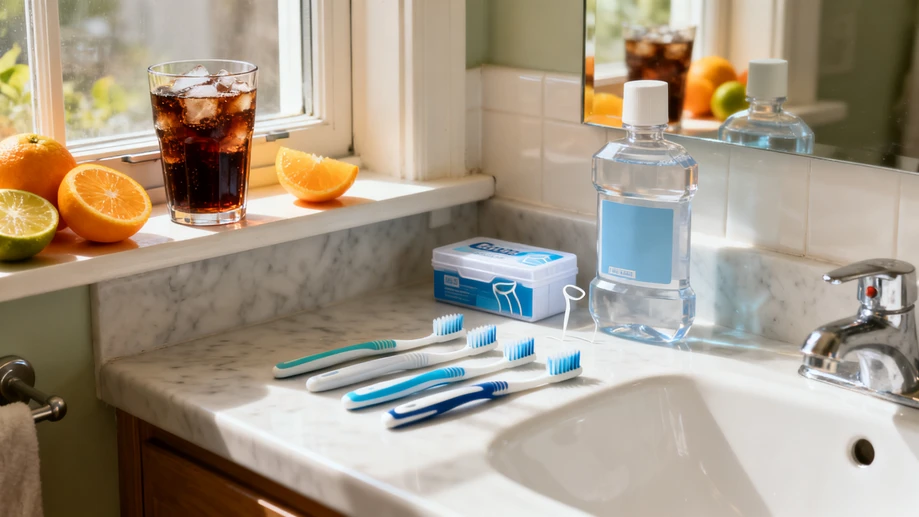
Another extremely underrated tip almost no one tells you is that you should never brush your teeth immediately after eating sour food or drinking carbonated drinks. When you bite into a fresh orange, take a sip of iced lemon tea or chug a can of cola, the acid in those food items softens the hard outer enamel layer of your teeth temporarily, and brushing right after that will scrape off tiny particles of the softened enamel that will never grow back. All you need to do instead is swirl a sip of plain water around your mouth for 10 seconds to wash away the leftover acid and food residue, and wait 30 minutes before you pick up your toothbrush. A lot of people also skip flossing entirely, thinking it is only for people who get food stuck between their teeth, but the tight gaps between teeth that your normal toothbrush can never reach trap plaque all day long, which slowly rots the side of your tooth to form hidden cavities that you will not notice until the decay reaches your nerve.
There are also hundreds of viral dental care fads online that do far more harm than good for ordinary people. Those super strong whitening strips that claim to turn your teeth pure white in three days will erode your enamel over consistent use, leaving you with overly sensitive teeth that ache when you eat anything even slightly hot or cold. You do not need to chase perfectly bright white teeth, because healthy natural teeth are light pale yellow, not the same shade of white as a sheet of printer paper. You also need to replace your toothbrush at most every three months, even if the bristles do not look worn out, because the moist environment in your bathroom lets bacteria build up deep between the bristles over time, and an old toothbrush can carry more bacteria than the edge of your toilet seat if you leave it sitting out for too long.
Good daily dental care does not require you to spend hundreds of dollars on fancy electric toothbrushes or luxury imported toothpaste, all it takes is a few tiny adjustments to your existing routine that take less than one extra minute total every single day. Once you build these small habits into your regular schedule, you will notice after just a few months that you rarely have random tooth aches, you can drink iced drinks or eat sour fruit without wincing, and your annual dental checkup will come back with far fewer bad surprises. The money you save on expensive fillings, root canals and crowns over the decades adds up to thousands of dollars you can spend on trips, nice meals or little gifts for yourself, and your teeth will stay strong and healthy long into your old age without causing you unnecessary pain and trouble.